RV · POWDER TRANSFER INSIGHTS
Dry Powder Transfer: What Makes the Difference in Efficiency, Material Loss and Maintenance?
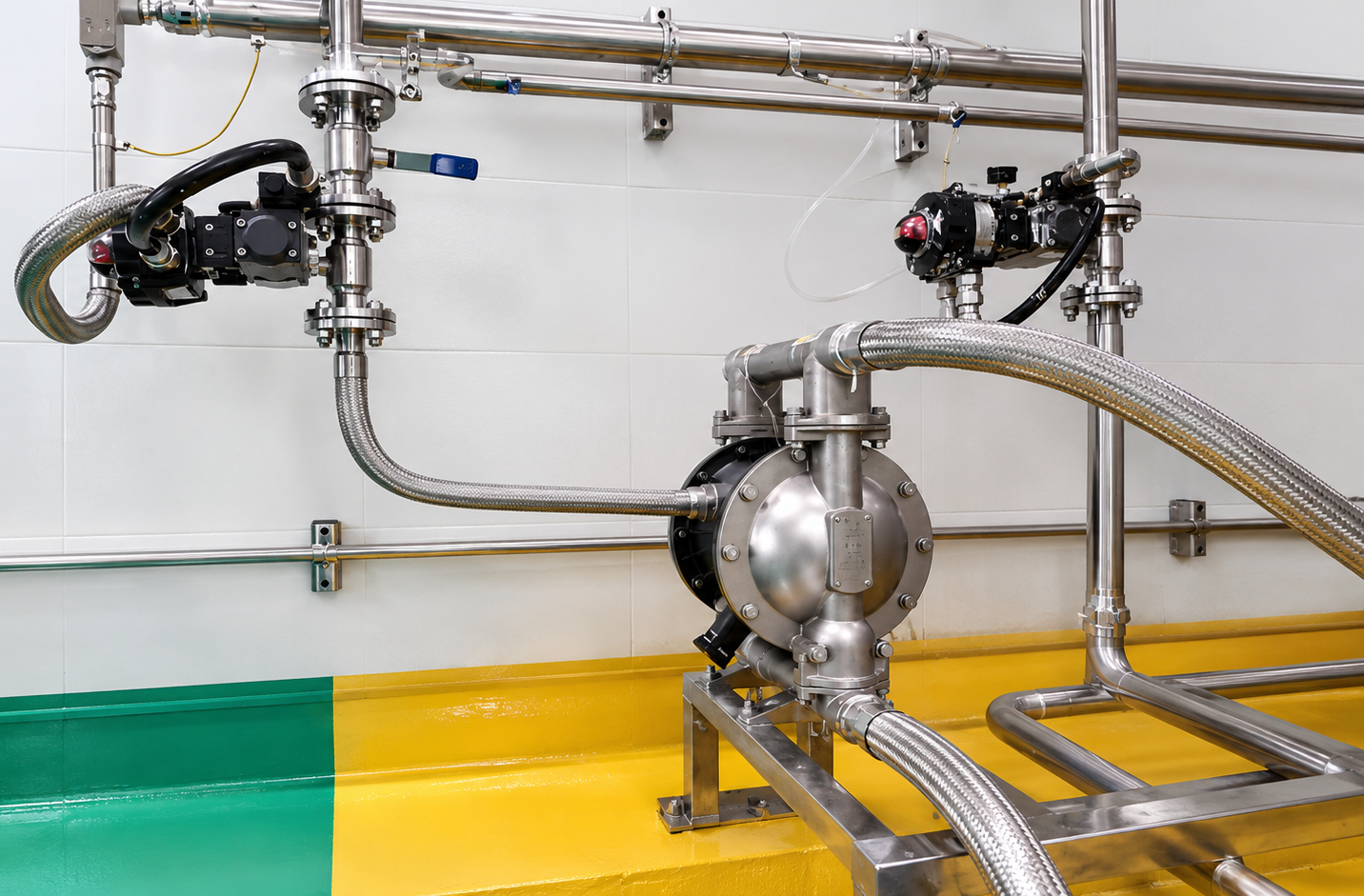
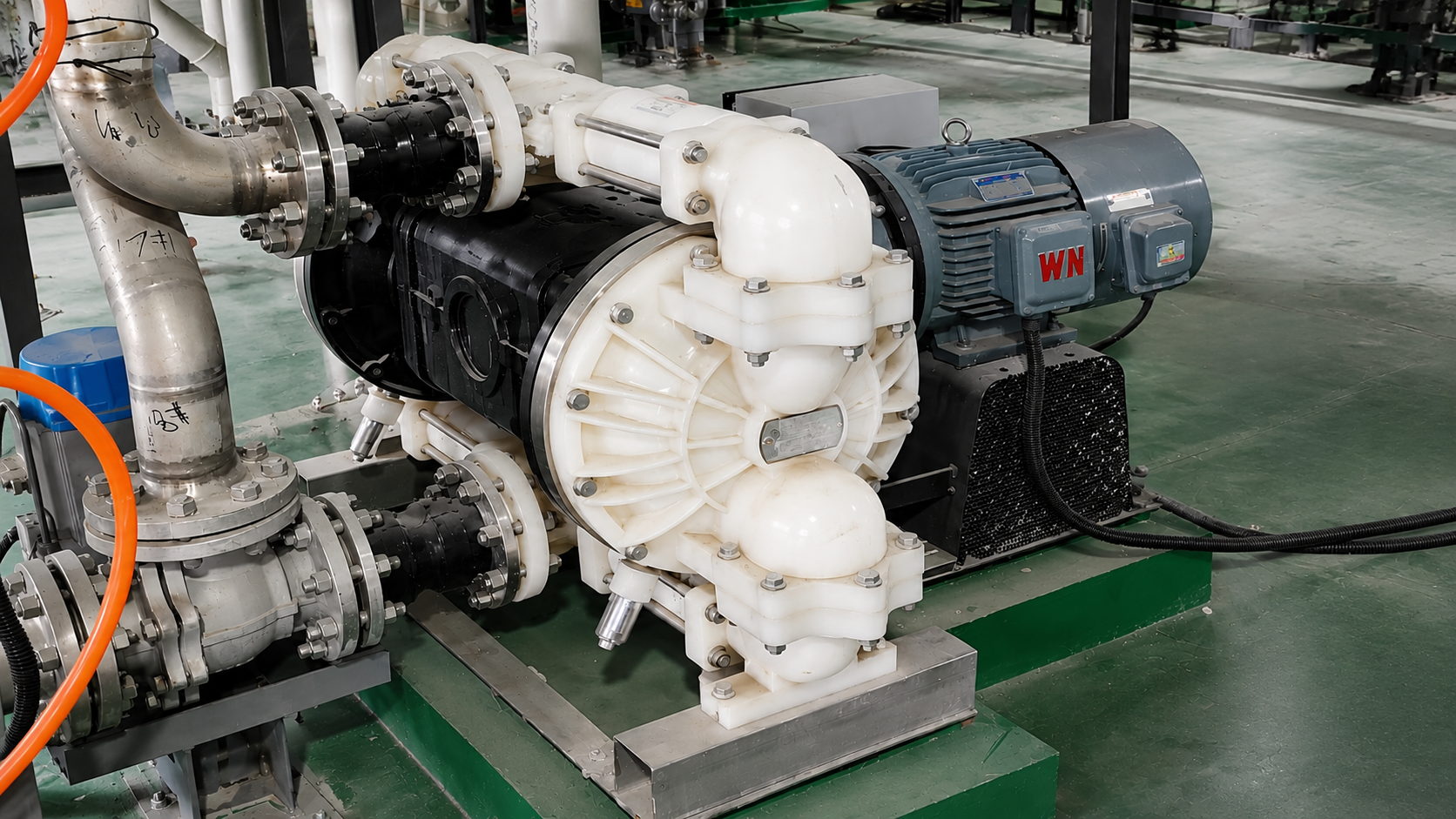
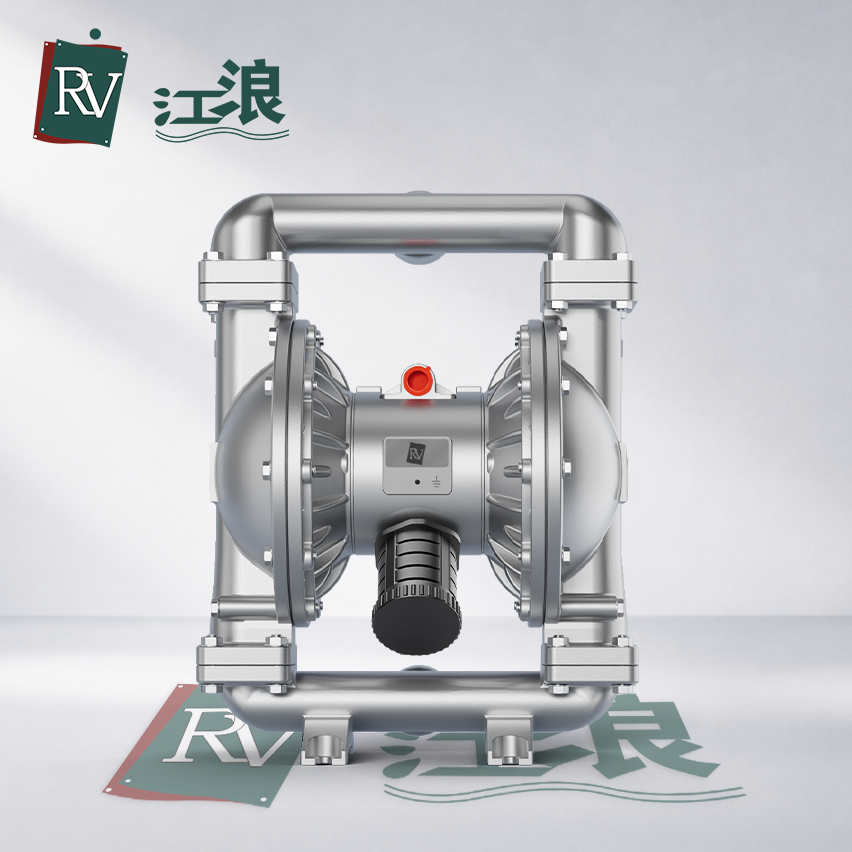
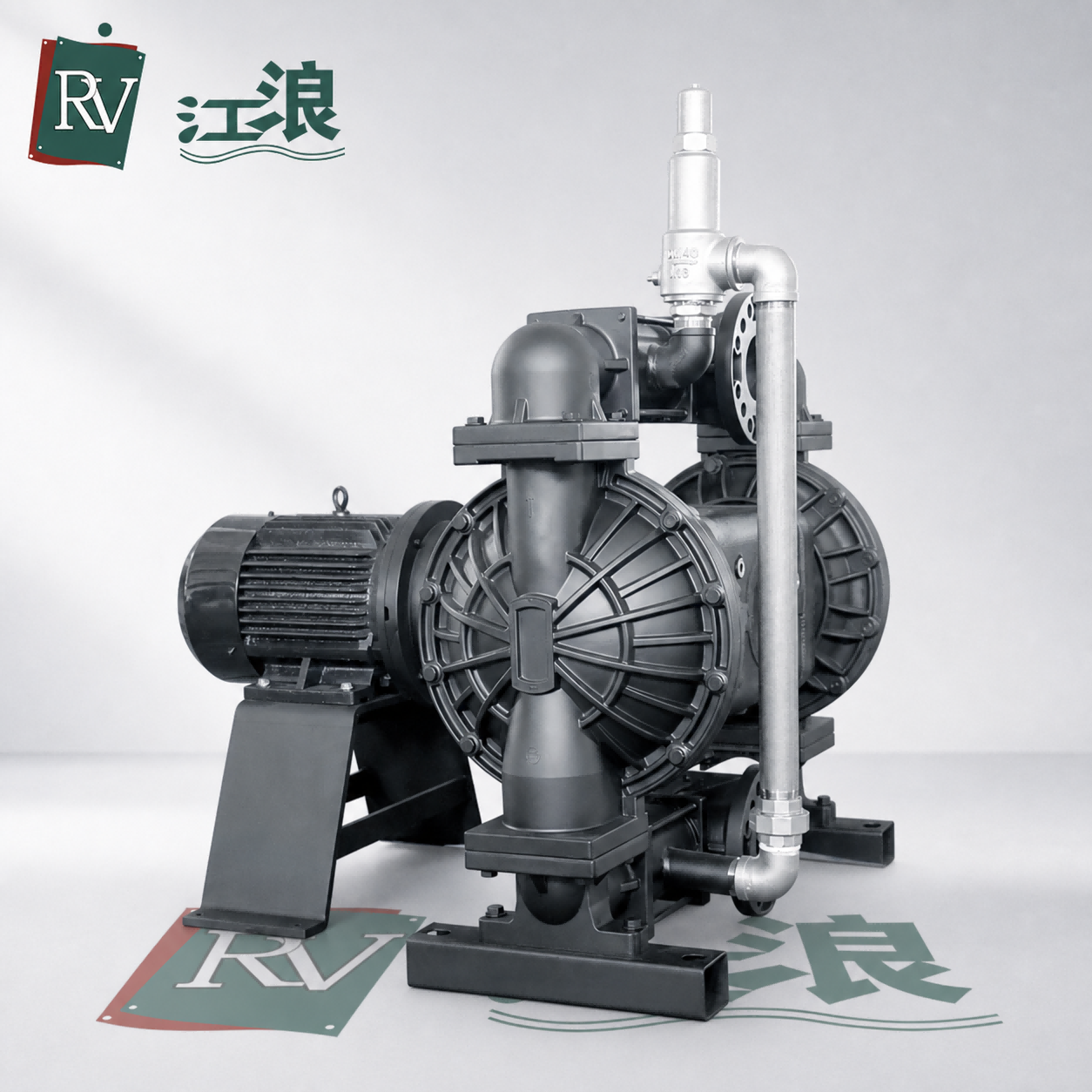
Dry powders behave differently from liquids: once compacted into lumps, they can cause blockages. A powder pump is an air-operated diaphragm pump designed specifically for dry powder transfer. Fluidization helps the powder move smoothly through the pump chambers.
Once you have chosen the right pump type, the next step is to compare product performance. Three key measures provide a starting point for understanding the advantages of the RV Yoga powder pump.
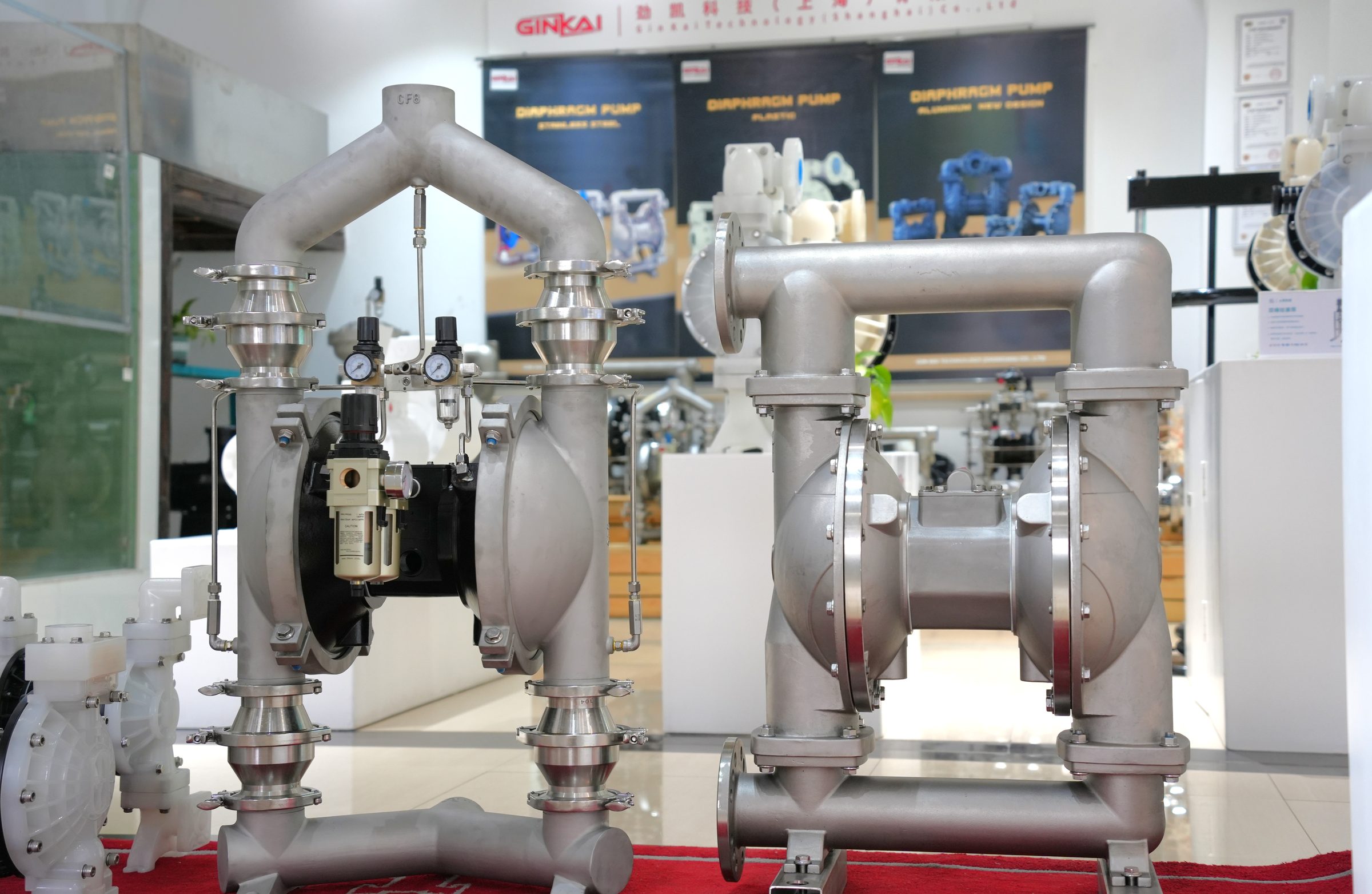
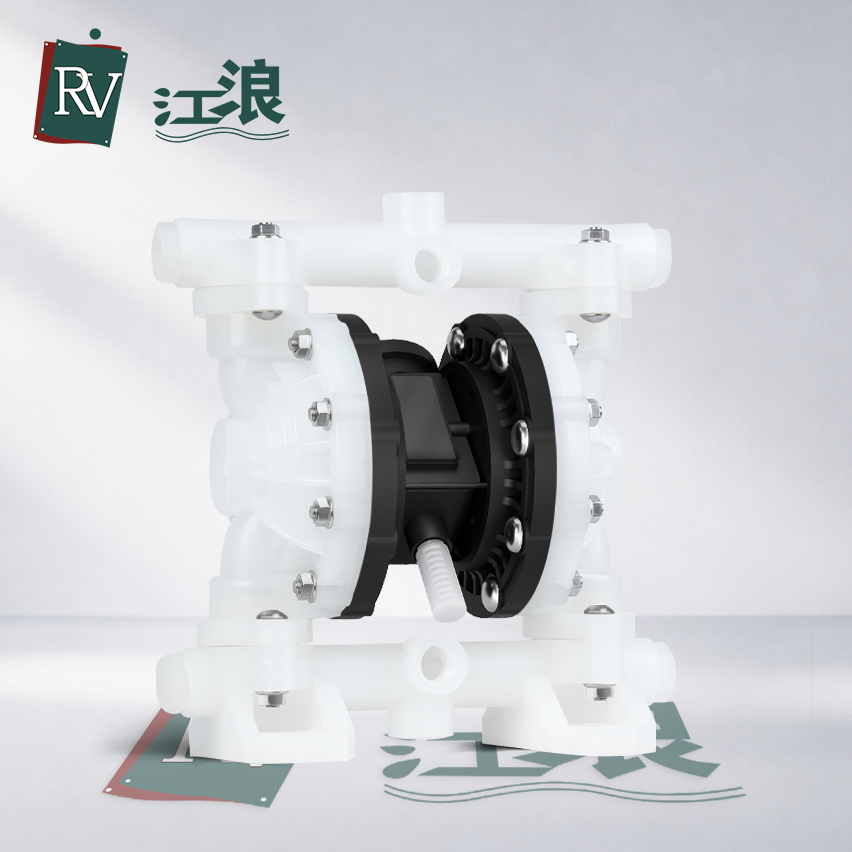
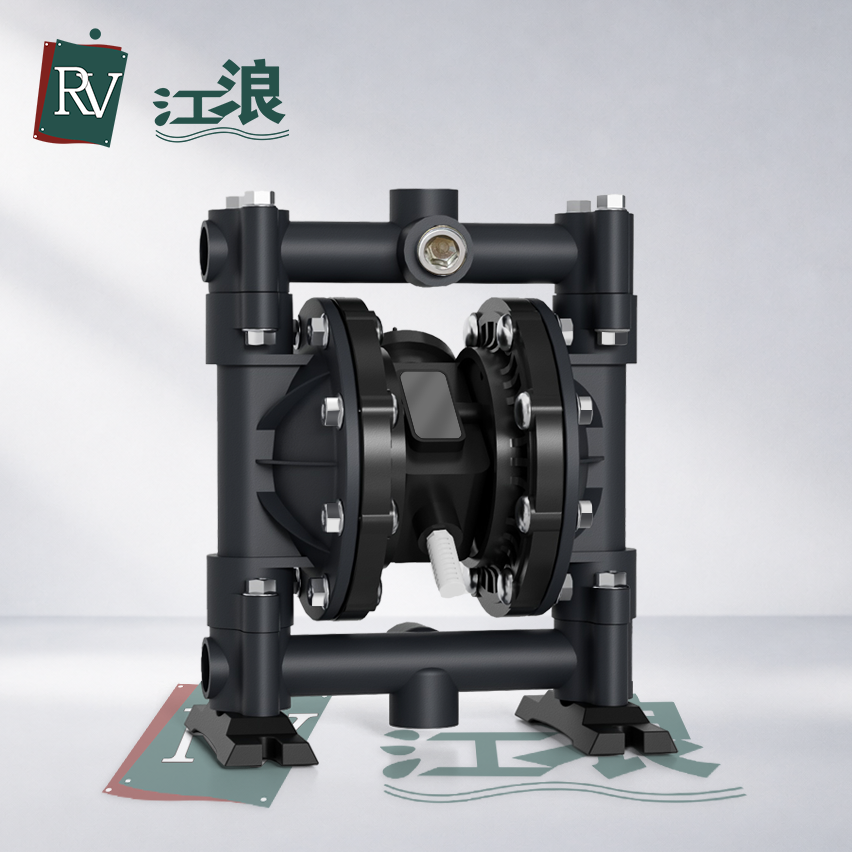
01 / Three Comparisons That Show the Difference Left: Standard powder pump | Right: RV Yoga powder pump
| Measure | Standard Powder Pump | RV Yoga Powder Pump |
|---|---|---|
| Transfer Efficiency | 1× Baseline | Approx. 1.5× Approx. 1.5 times the standard pump |
| Material Loss Rate | 3–5% | <0.8% Lower material loss |
| Annual Maintenance Cost | Baseline | More than 50% lower Under the stated comparison conditions |
Transfer efficiency is measured against a standard powder pump set at a baseline of 1×. These figures are from RV's internal comparisons. Actual performance depends on the model, material and site operating conditions.
Two Further Indicators: Operation and Maintenance
1,000 Hours of Continuous Operation
In internal testing, key components operated continuously for 1,000 hours with minimal reduction in flow and no blockages.
Diaphragm Replacement in 20–40 Minutes
Clamp connections make disassembly and reassembly easier. Internal documentation gives an indicative on-site diaphragm replacement time of approximately 20–40 minutes.
Data note: The efficiency, material loss, operating performance, maintenance time and maintenance cost figures above are based on RV's internal testing and comparison records. Actual results depend on the model, material and site operating conditions.
With those comparisons in mind, consider the design itself: how can a pump keep powder flowing, reduce buildup and simplify routine maintenance?
02 / Seven Design Details Behind the Advantages
During each pumping cycle, a powder pump introduces compressed air or an inert gas into the chambers at timed intervals to keep the powder fluidized. The air-operated diaphragms then move the material through the pump. A conventional liquid diaphragm pump therefore cannot simply be used for dry powder transfer without adaptation, and the fluidization system must suit the material being handled.
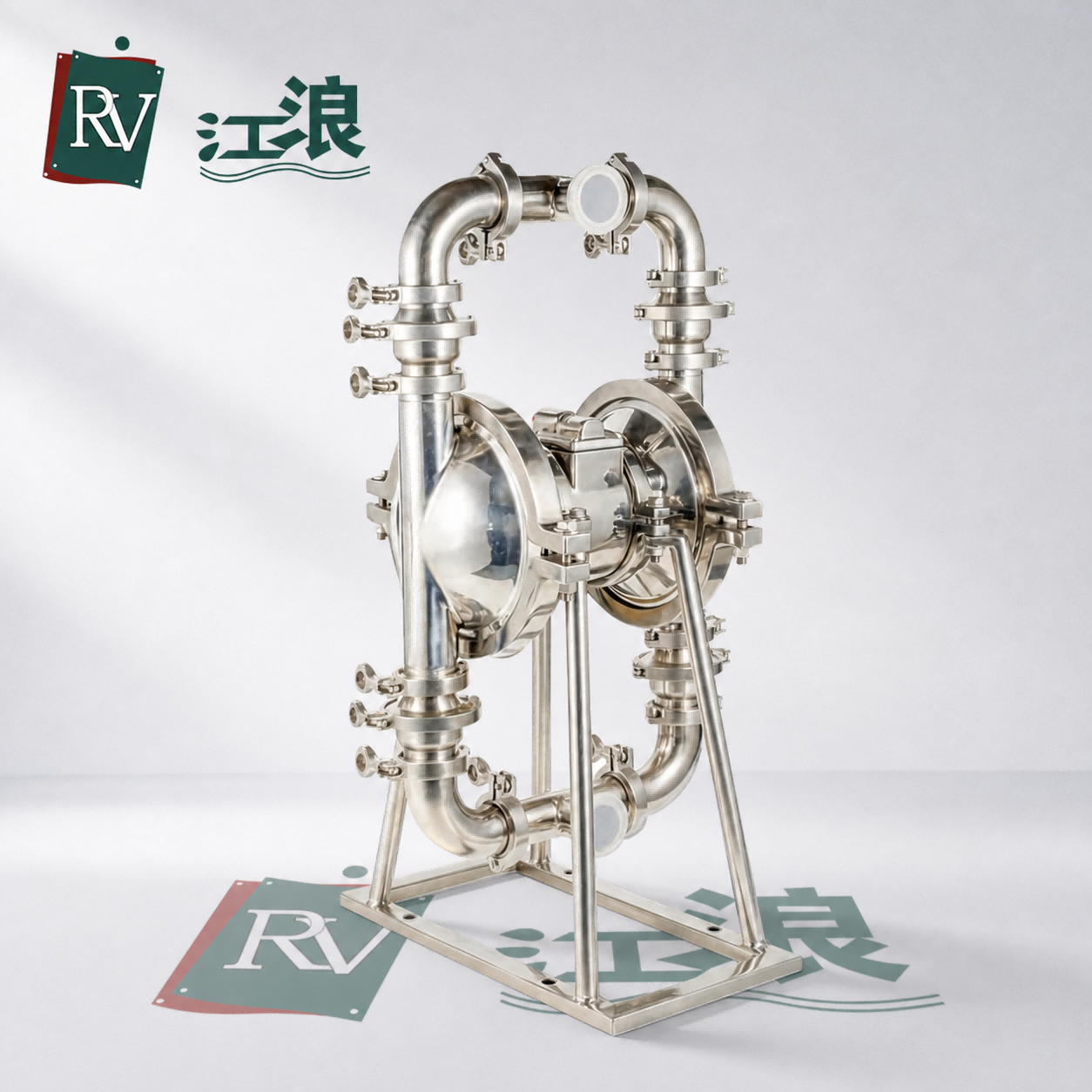
In continuous production, buildup and blockages, dust escape, material residue and cleaning shutdowns all add to the workload. The RV Series addresses these issues through targeted design in four areas: flow passages, sealing, fluidization and maintenance. Enclosed transfer and automatic airflow distribution for induced fluidization in the RV powder pump
① 120° Y-Shaped Manifolds Reduce Buildup at Bends
The inlet and outlet manifolds use a 120° Y-shaped design to reduce the material buildup associated with right-angle bends and allow powder to pass through more smoothly.
② A Ball-Seat-Free Design Simplifies the Flow Path
The ball chambers have no separate ball seats, reducing the number of parts and seals. According to RV product documentation, this design helps improve suction and powder passage while reducing flow-path narrowing caused by buildup around ball seats.
③ Three Check Valves Help Prevent Material Backflow
Check valves are fitted at the upper-cover and lower-cover connections to the vertical columns, with an additional valve at the outlet. They reduce the risk of material flowing back into the air control valve and help protect the pneumatic controls.
④ Clamp Connections Simplify Maintenance
The vertical columns, center body, and upper and lower covers use clamp connections for sealing and quick disassembly by hand. This makes on-site maintenance and cleaning easier when replacing wear parts such as diaphragms.
⑤ Enclosed Transfer with Automatic Induced Fluidization
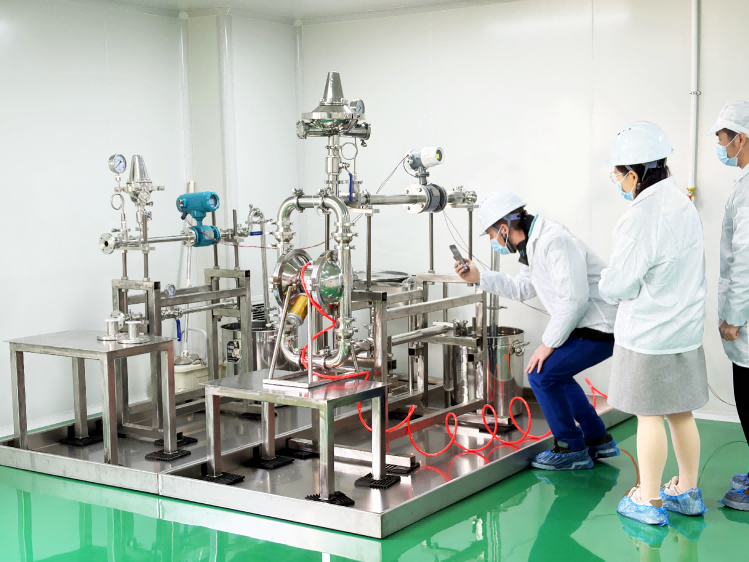
Powder moves directly from its container to the formulation point through a fully enclosed transfer system, reducing dust escape. A stall-free air valve works with an automatic airflow distribution system that induces fluidization, helping prevent sudden powder discharge at startup.
⑥ Separate Fluidizing and Conveying Gas Supplies
For materials sensitive to oxidation or moisture, dry fluidizing gas can be supplied separately. An inert gas such as nitrogen can also be used when required.
⑦ Three Air Filter Regulators for Supply Adjustment
The pump is supplied with three air filter regulators. The purge and inlet air supplies can be adjusted separately to suit the material's specific gravity, while the filters remove moisture from the air supply.
03 / Match the Model to Your Operating Conditions
After reviewing the design, match the specifications to your site requirements. The RV Series is intended for dry, lightweight powders. Start with the series specification ranges, then confirm the model against your material and operating conditions. RV Series Powder Pump
RV Series Selection Specifications
| Connection Sizes | 1″, 1.5″, 2″, 3″ (DN25–DN80) |
|---|---|
| Maximum Transfer Capacity | 1,200–6,000 kg/h Depending on the model and operating conditions |
| Maximum Head | 20 m |
| Suitable Bulk Density | 0.08–0.8 g/cm³ |
| Pump Body Materials | Aluminum alloy, carbon steel, stainless steel, etc. |
These are specification ranges for the series. Final selection must be based on the specific model and material conditions.
Five Points to Confirm Before Selecting a Pump
- Material properties: Confirm bulk density, particle size, and sensitivity to moisture or oxidation. If bulk density exceeds 0.8 g/cm³ or the particles are relatively coarse, confirm suitability before proceeding.
- Transfer requirements: Define the required flow rate and head, then choose a size using the performance specifications of the individual model.
- Design suitability: Review inlet and outlet bends, areas prone to buildup, and sealing points, with attention to blockage risks during long-term operation.
- Maintenance cost: Check wear-part replacement times and whether special tools are needed. Consider total cost over the equipment's service life.
- Operating environment: For areas requiring dust explosion protection, confirm the suitability of the specific model. For pharmaceutical and food applications, verify materials and hygienic requirements.
04 / Two Common Questions About Use and Maintenance
Which materials are suitable for a powder pump?
Typical materials include pigments; plasticizers and flame retardants used in plastics; organic powders such as acrylic and silicone resins; and lightweight, dry powders used in fine chemicals, pharmaceutical raw materials and intermediates. Dry, free-flowing powders can be evaluated for use with a specific model.
Is the RV powder pump easy to maintain?
The vertical columns, center body, and upper and lower covers use clamp connections for convenient disassembly and reassembly by hand. Maintenance for diaphragms and other wear parts can be planned according to the product documentation and site conditions; the indicative maintenance time is approximately 20–40 minutes.
Understand the Advantages. Choose the Pump That Fits.
Comparisons of efficiency, material loss and maintenance help clarify selection priorities. Your material and operating conditions determine the configuration. To discuss a RV powder pump, contact RV Technology with the material name, bulk density, particle size, required transfer capacity and head.