True hygienic performance requires far more than a stainless-steel exterior.
- It begins with the flow-path design and the elimination, wherever possible, of every dead zone where residue can collect.
- In the food, pharmaceutical, and fine-chemical industries, pump hygiene is never a minor concern.
- A single out-of-spec microbial result can mean scrapping an entire batch. One incomplete cleaning cycle can create the conditions for recurring contamination.
- Many companies pay a premium for a "hygienic" pump yet continue to encounter microbial-control problems. The issue may not lie in operating practice at all, but in the pump's underlying design.
01 Your "Hygienic" Pump May Only Look Hygienic
Appearance is only the surface. Hygiene is determined by what is inside.
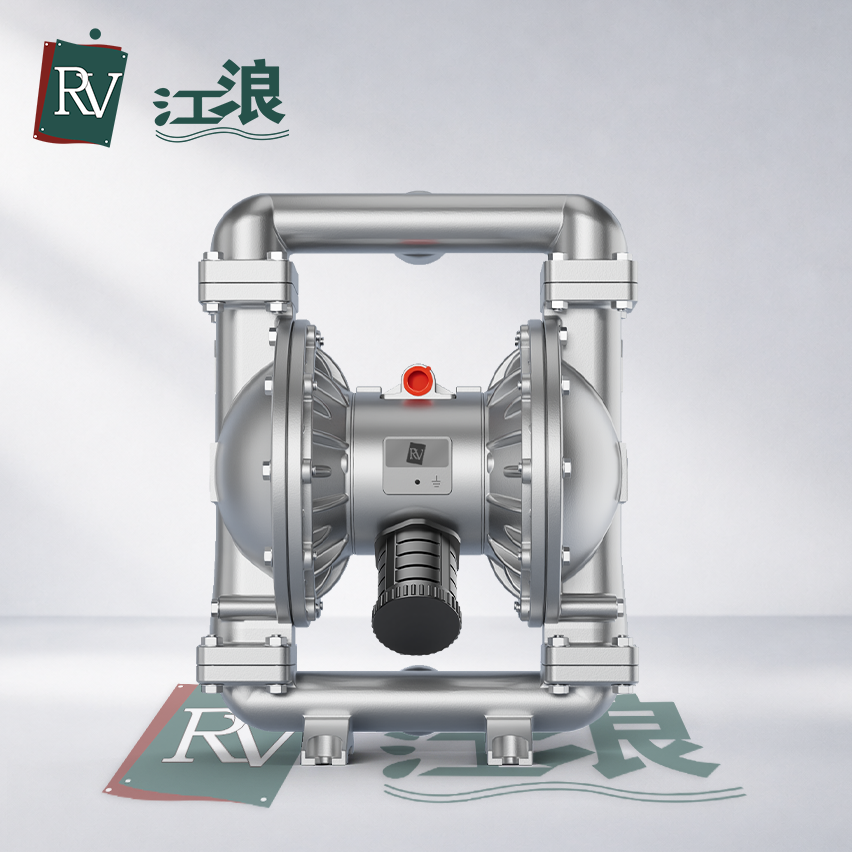
A common industry practice is to replace the casing of a standard industrial diaphragm pump with stainless steel-or cover the exterior with polished stainless-steel plate-and then label the result "hygienic."
From the outside, gleaming stainless steel certainly looks clean. Inside, however, the flow path, connections, and sealing design may be essentially unchanged from those of an ordinary industrial pump. Dead zones remain, and product may still be trapped in the chamber.
Material left in those dead zones can accumulate and deteriorate. Cleaning solution may not reach it, steam may not penetrate it, and bacteria can multiply out of sight. At the next startup, the trapped residue can be flushed into the product and contamination follows.
That is less "hygienic grade" than"hygienic-looking."
02 What Hygiene Risks Can Remain When Only the Casing Is Replaced?
The "standard pump + stainless-steel casing" approach creates three main structural risks.
- The internal flow path has not been redesigned
Standard industrial pumps often contain right-angle turns, recesses, and low-flow zones where material can remain after passing through. A shiny exterior does nothing to stop residue from accumulating inside.
- The connection method does not meet hygienic requirements
Threaded joints and flange sealing faces can create crevices that are difficult to clean once product seeps into them. Hygienic connections instead emphasize quick-release clamps and flush sealing surfaces to minimize gaps and residue.
- The diaphragm chamber can retain product
If the diaphragm chamber contains dead zones, material can remain on the chamber wall and around the diaphragm edge after every stroke. Over time, these retained areas can become breeding grounds for bacteria.
These issues are difficult to detect from the outside. Brochures often specify "304/316L material," yet the internal architecture that actually determines hygienic performance may receive little explanation.
03 True Hygienic Design Starts with the Structure
The defining principle of a hygienic pump is not simply "made of stainless steel." It is: "No Dead Zones"
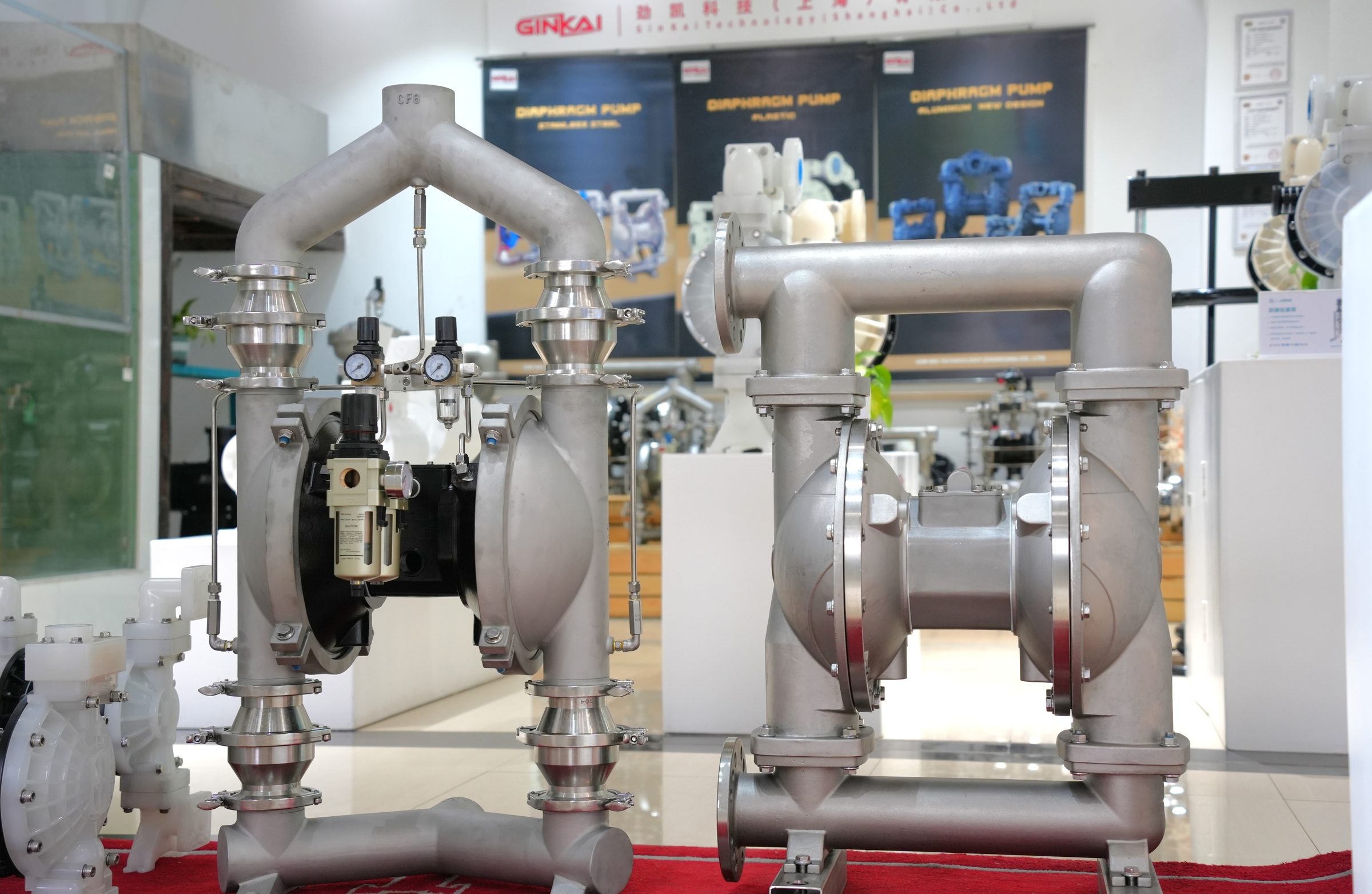
- Fully polished flow paths with no right-angle corners
Every product-contact surface should be flat and smooth, with radiused transitions at changes in direction to prevent residue-trapping recesses. The required surface roughness is Ra < 0.8 μm (RV's internal standard: Ra < 0.4 μm).
- Quick-clamp connections with no crevices
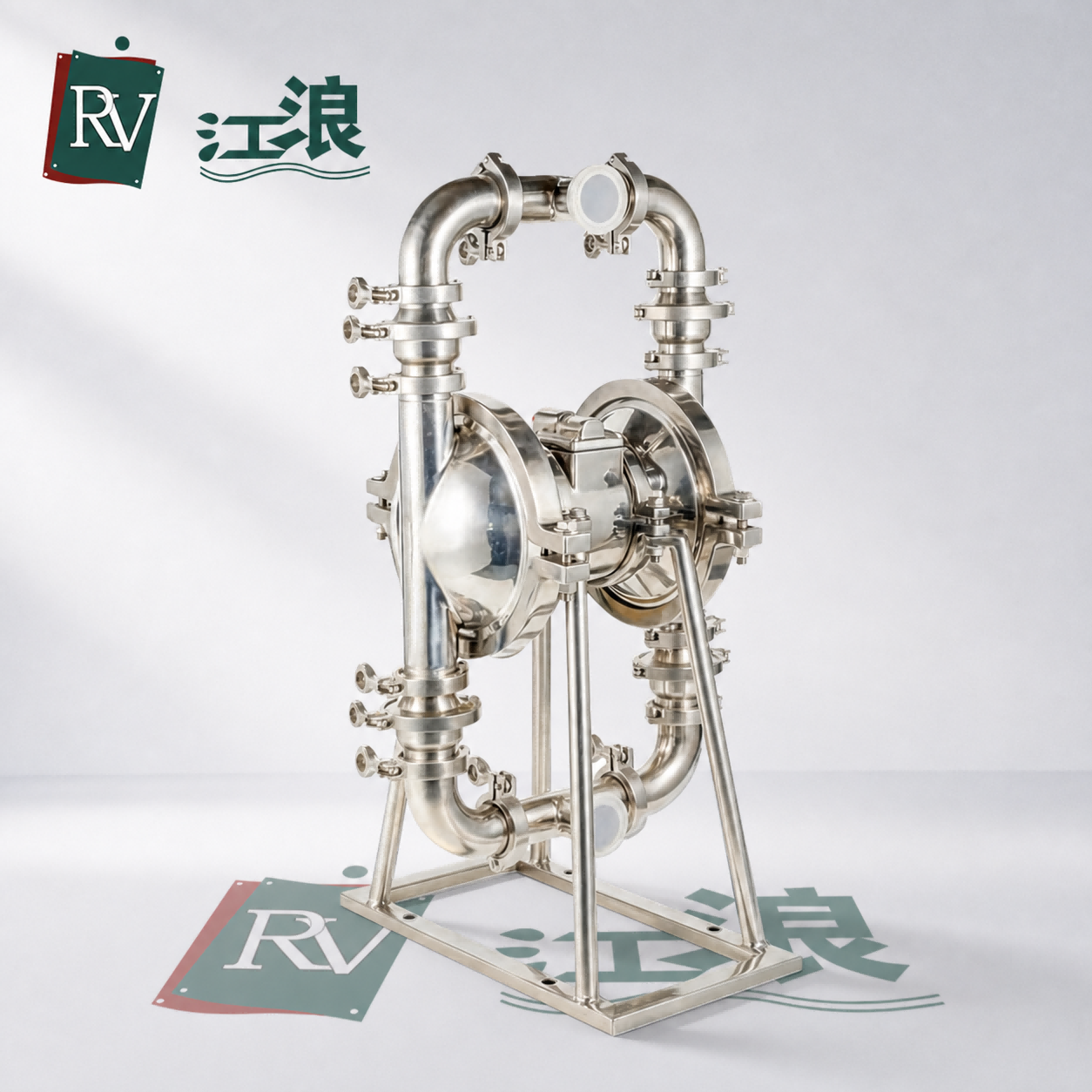
The inlet and outlet connect to the pump body with hygienic clamps. The gasket sits flush with the flow path-neither protruding nor recessed-to minimize crevices where product can collect.
- A diaphragm chamber with fewer dead zones
The diaphragm chamber is optimized for smooth product flow, reducing the space in which material can remain at the end of a stroke and creating a structural basis for drainage and cleaning.
- Easy drainage and thorough cleaning
The flow path and diaphragm chamber are designed for low retention and cleanability, allowing CIP solution to cover product-contact surfaces. Where more complete drainage is required, a tilting-drain or automatic-drain configuration can be selected.
- All product-contact materials meet the relevant requirements
It is not enough to examine the pump body metal. Elastomer components-including diaphragms, valve balls, and gaskets-should also meet the applicable FDA food-contact requirements and be compatible with the cleaning chemicals and sterilization temperatures used.
Every one of these requirements calls for a redesigned pump body and new tooling.
None can be achieved by simply wrapping an ordinary pump in stainless-steel plate.
04 RV Hygienic Diaphragm Pumps: True Hygiene Means No Dead Zones
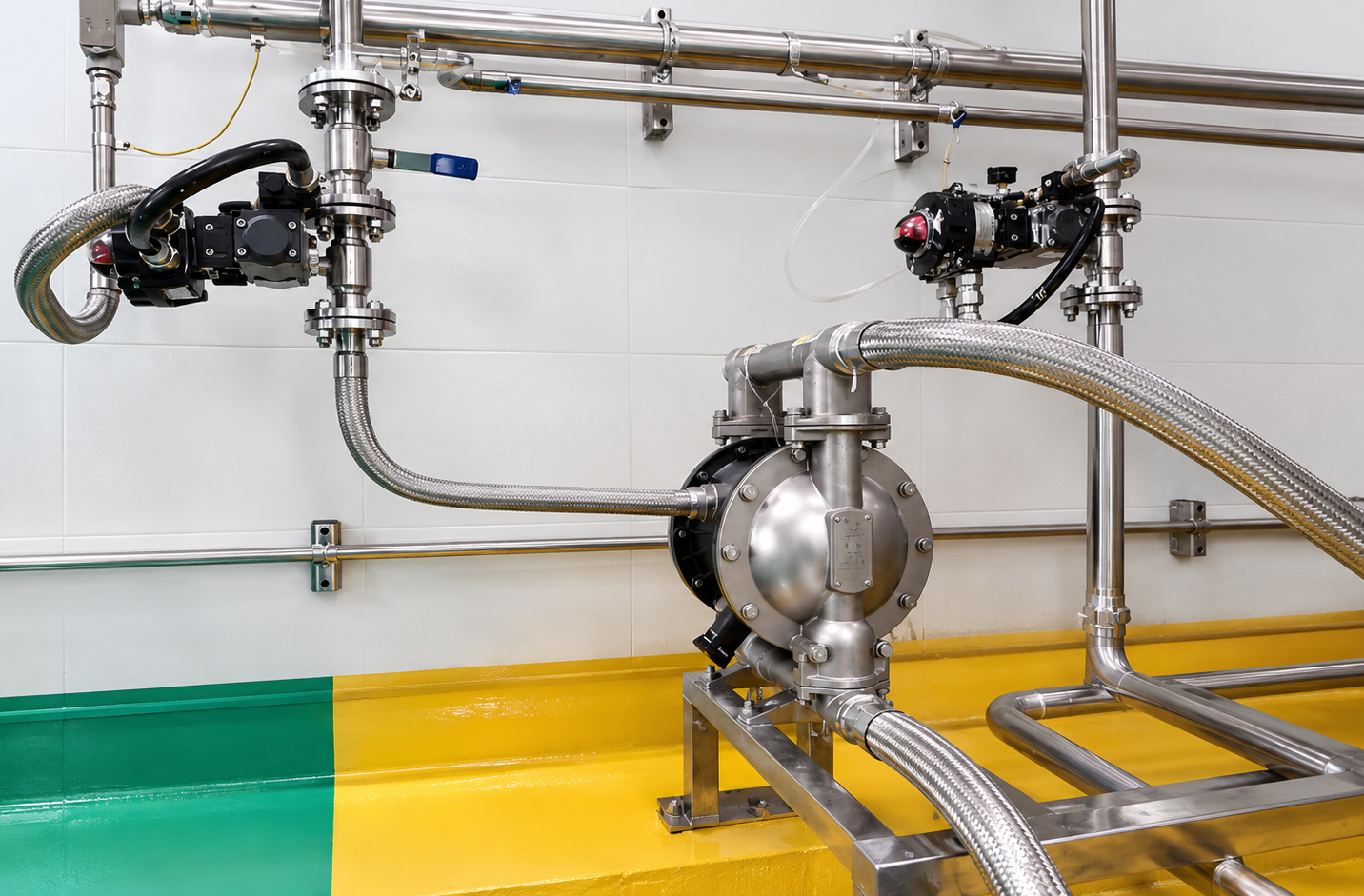
From the beginning, RV Technology did not take the shortcut of fitting a standard pump with a new casing. Its hygienic air-operated diaphragm pumps were redesigned from the flow path outward to meet hygienic-service requirements.
- A genuinely dead-zone-minimized flow path
The pump body is precision cast, CNC machined, and electropolished. Product-contact surfaces achieve Ra ≤ 0.8 μm, while radiused flow-path transitions reduce sharp corners, recesses, wall adhesion, and hard-to-rinse areas.
- Fully hygienic clamp connections
Standard hygienic quick-release clamps connect the inlet and outlet to the pump body for convenient disassembly and cleaning. Sealing faces sit flush with the flow path, avoiding residue-trapping threaded or flanged crevices.
- An optimized diaphragm chamber
The diaphragm chamber is optimized through CFD flow simulation. A smooth flow path and balanced chamber proportions reduce low-flow zones. For applications with stricter residual-liquid requirements, a tilting-drain option is available.
- Materials selected for FDA food-contact requirements throughout the pump
Wetted parts are made from 316L stainless steel. Elastomer components-including diaphragms, valve balls, and O-rings-use materials that meet FDA food-contact requirements and are suited to CIP acid/alkali cleaning and high-temperature SIP sterilization.
- Optional non-through-hole composite diaphragms reduce connection crevices
A non-through-hole diaphragm avoids a through-hole and bolted interface in the product-contact area, structurally reducing spaces where material and bacteria could accumulate.
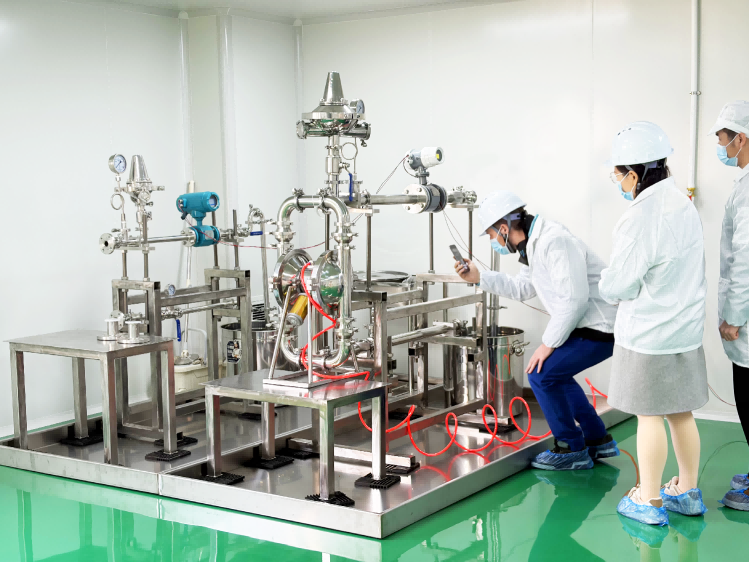
- Assembly and testing in a clean workshop
Assembly, commissioning, and factory testing are completed in a controlled clean environment. This reduces the entry of dust and foreign contaminants and closes the loop between hygienic design and hygienic manufacturing.
Beyond its standard hygienic pump, RV also offers an upgraded tilting-drain version for applications that require inverted liquid discharge.
05 From Basic to Purpose-Built: The Key Differences
Criterion | Standard Pump + Stainless-Steel Casing | RV Hygienic Diaphragm Pump |
Design philosophy | Changes the appearance of an ordinary industrial pump; the internal structure is unchanged. | Redesigned from the flow path onward specifically for hygienic service. |
Internal flow path | Right-angle corners, recesses, and low-flow zones make residue more likely. | Fully radiused transitions and Ra ≤ 0.8 μm polishing reduce dead zones and wall adhesion. |
Connections | Threaded or flanged connections can create crevices. | Hygienic quick clamps and flush sealing faces reduce product-entrapment risk. |
Diaphragm chamber | Dead zones can leave more product behind after shutdown. | A CFD-optimized chamber reduces retention and can be upgraded with a tilting-drain design. |
Cleanability | CIP may leave hard-to-rinse areas and fail to clean completely. | Designed for full-flow-path cleaning and, with a compatible configuration, SIP sterilization. |
Diaphragm material | Ordinary rubber may lack documentation for food-contact use. | Materials meet FDA food-contact requirements and suit cleaning and sterilization. |
Microbiological risk | Dead zones can harbor bacteria and create a risk of recurring contamination. | Low-retention, low-dead-zone design reduces microbial growth risk at the structural level. |
Long-term operating cost | Frequent disassembly and cleaning, batch-loss risk, and maintenance can raise costs. | Easier cleaning helps reduce contamination risk and downtime. |
Final Note
Hygienic equipment should never be merely skin-deep.
When choosing a diaphragm pump, do not stop at a shiny casing or a stainless-steel material specification. Ask:
- How is the internal flow path designed?
- Are there any dead zones?
- Can the pump drain fully?
- Can CIP reach every product-contact surface?
True hygiene means leaving bacteria nowhere to hide. |